

Frost Monitoring and Protection for Farms
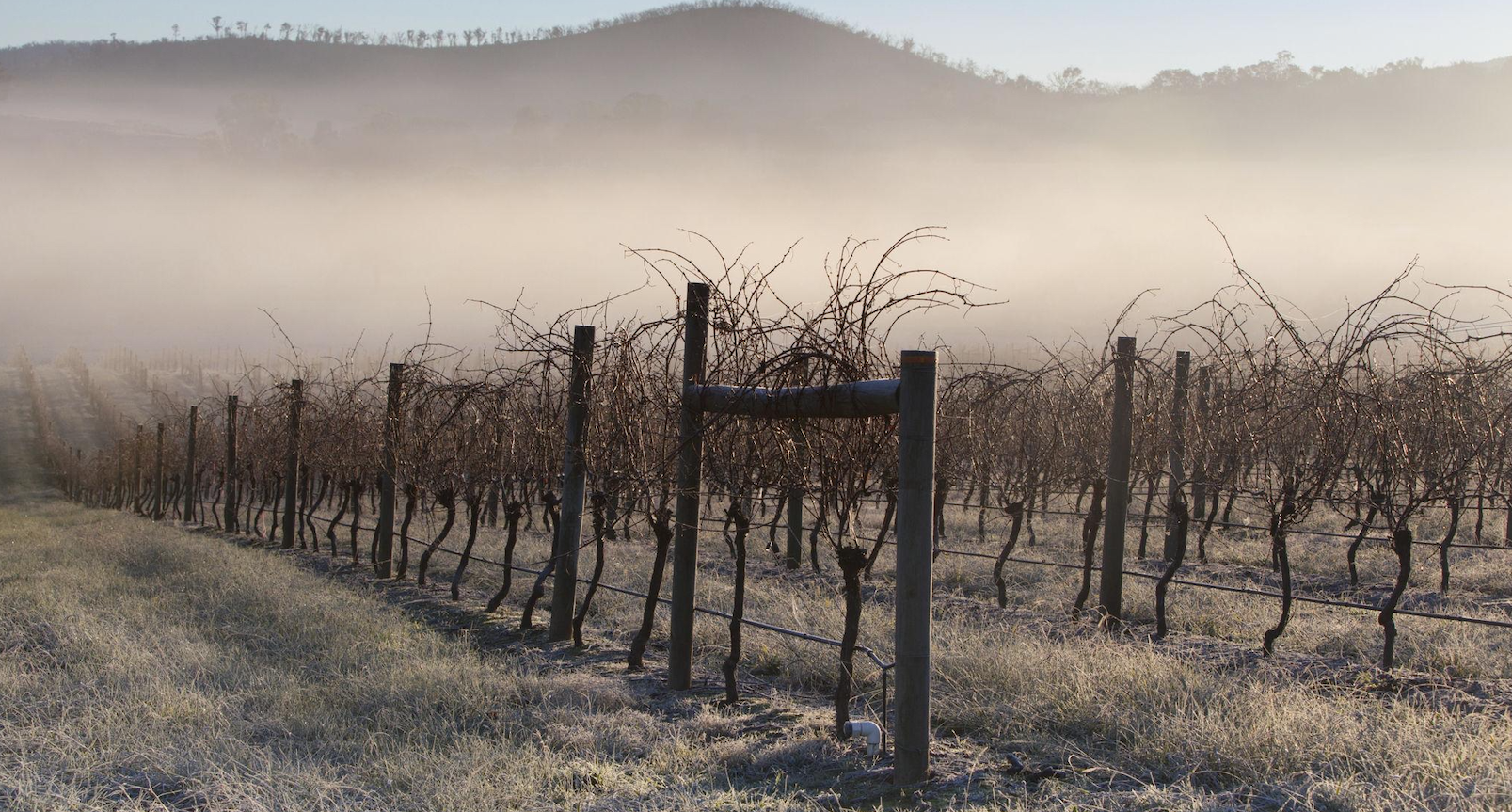
A Frosty Vineyard
Frost is one of the most damaging and unpredictable risks in agriculture. A single cold night can undo months of work, particularly in high-value crops like vineyards, orchards and horticultural operations. Unlike many other environmental risks, frost develops quickly and leaves little margin for error, which is exactly why accurate, local monitoring has become essential rather than optional for growers exposed to it.
Key takeaways
Cold air is heavier than warm air and pools in low-lying areas, making frost risk highly uneven across a single property.
Sensors need to sit at crop height, not standard meteorological height, to capture the temperatures that actually cause damage.
Frost fans and irrigation both depend on understanding the inversion layer to work effectively.
Minutes matter during a frost event, which is why automated alerts matter more here than almost anywhere else in farm monitoring.
How frost actually forms
Frost typically develops on clear, calm nights, when heat stored in the ground during the day radiates rapidly back into the atmosphere. As the ground cools, the air just above it cools too, eventually reaching the point where ice crystals form on plant surfaces. The key mechanism here is temperature inversion: normally air cools with height, but during a frost event, colder air settles near the ground while slightly warmer air sits above it, putting the coldest conditions exactly where the crop is. Cold air is also heavier than warm air, so it flows downhill and pools in low-lying or sheltered parts of a property, which is why frost risk is so often concentrated in valleys and hollows rather than spread evenly across a farm. This is also exactly why regional weather data falls short: conditions at a station a few kilometres away can differ significantly from a specific block.
Why monitoring directly on the property matters
The core advantage of on-farm monitoring is accuracy. Measuring temperature directly within the crop environment shows growers precisely when frost risk is building, enabling earlier, better-informed decisions rather than reactive ones based on a general forecast. In many cases, that difference buys a genuinely critical window to activate protection measures. Monitoring over time also reveals patterns: certain parts of a property will consistently run colder than others, and mapping those variations lets growers target protection efforts and resources where they actually matter.
Getting sensor placement right
Where and how temperature is measured has a real impact on how useful the data ends up being. Sensors need to sit at crop height, since that's where frost damage actually occurs, not at standard meteorological height, which can miss what's happening at ground level entirely. In vineyards, that often means placing sensors within the canopy itself. Vertical measurement matters too: because of the inversion effect, air just a few metres above the ground can be noticeably warmer than air at crop level, and measuring at multiple heights reveals how strong that inversion is and how effective certain protection methods will be. It's also worth keeping sensors clear of buildings, trees and other structures, since proximity to any of these can distort airflow and produce misleading readings.
Why real-time alerts matter more here than almost anywhere else
Timing is everything during a frost event, and the difference between taking action and doing nothing often comes down to minutes. Modern systems can send configurable alerts to a phone the moment temperatures approach a critical threshold, meaning growers don't need to be on-site, or awake and checking data manually through the night, to know when intervention is needed. Alerts can also be tailored to specific crops or growth stages, so action gets triggered at the right point for what's actually at risk.
How growers actually protect against frost
Monitoring alone doesn't prevent frost, but it makes protection strategies far more effective when they're needed. Common approaches include:
Frost fans, which mix warmer air from above with colder air near the ground to reduce the inversion, most effective when growers understand the vertical temperature profile they're working with.
Irrigation, particularly in orchards, where water applied during a frost event releases latent heat as it freezes, holding plant temperature near freezing point, though it needs careful management to avoid causing further damage.
Heaters and wind machines, along with passive strategies like site selection and air drainage management for longer-term risk reduction.
Each method carries its own cost and limitations, and monitoring data is what tells a grower when and where to actually deploy them for the best return.
Mapping risk across the whole property
Not every part of a farm faces the same frost risk. Low-lying areas, sheltered zones and spots with poor air drainage tend to run colder, and deploying sensors across different areas builds a genuinely detailed picture of how frost behaves across the landscape over time. That picture helps prioritise protection spending toward the areas most likely to be hit, and can inform longer-term calls too, like where to plant sensitive crops or where to invest in infrastructure.
Bringing weather and soil data into the picture
Temperature is the headline factor, but it's not the only one. Wind speed affects how quickly cold air settles, with calm conditions generally raising frost risk, humidity influences how ice crystals form, and soil moisture affects how much heat the ground retains overnight. Integrating weather station data with frost monitoring builds a more complete picture of the conditions leading into a frost event, supporting better prediction and sharper decision-making.
What makes a frost monitoring system reliable
Reliability matters more here than in most farm monitoring applications, given how critical the timing window can be. Power supply needs real consideration for remote sites, with solar systems needing to hold up through periods of low sunlight. Connectivity matters just as much, since alerts are only useful if they arrive without delay, and cellular systems tend to be preferred in remote areas for their independence from local infrastructure. Sensor quality rounds it out: accurate, stable readings are essential, since lower-quality sensors that drift over time erode confidence in the data exactly when it matters most.
The bottom line
Frost is an unavoidable risk in many growing regions, but its impact can be genuinely reduced with the right approach. Combining accurate on-farm monitoring with the right protection strategy lets growers respond faster and make better-informed calls, working from real conditions rather than a general forecast. In high-value crops, even a modest reduction in frost losses can easily justify the investment in monitoring, and that kind of precise, real-time visibility is only becoming more valuable as growing conditions get harder to predict.