How Remote Farm Monitoring Works (Complete System Overview)
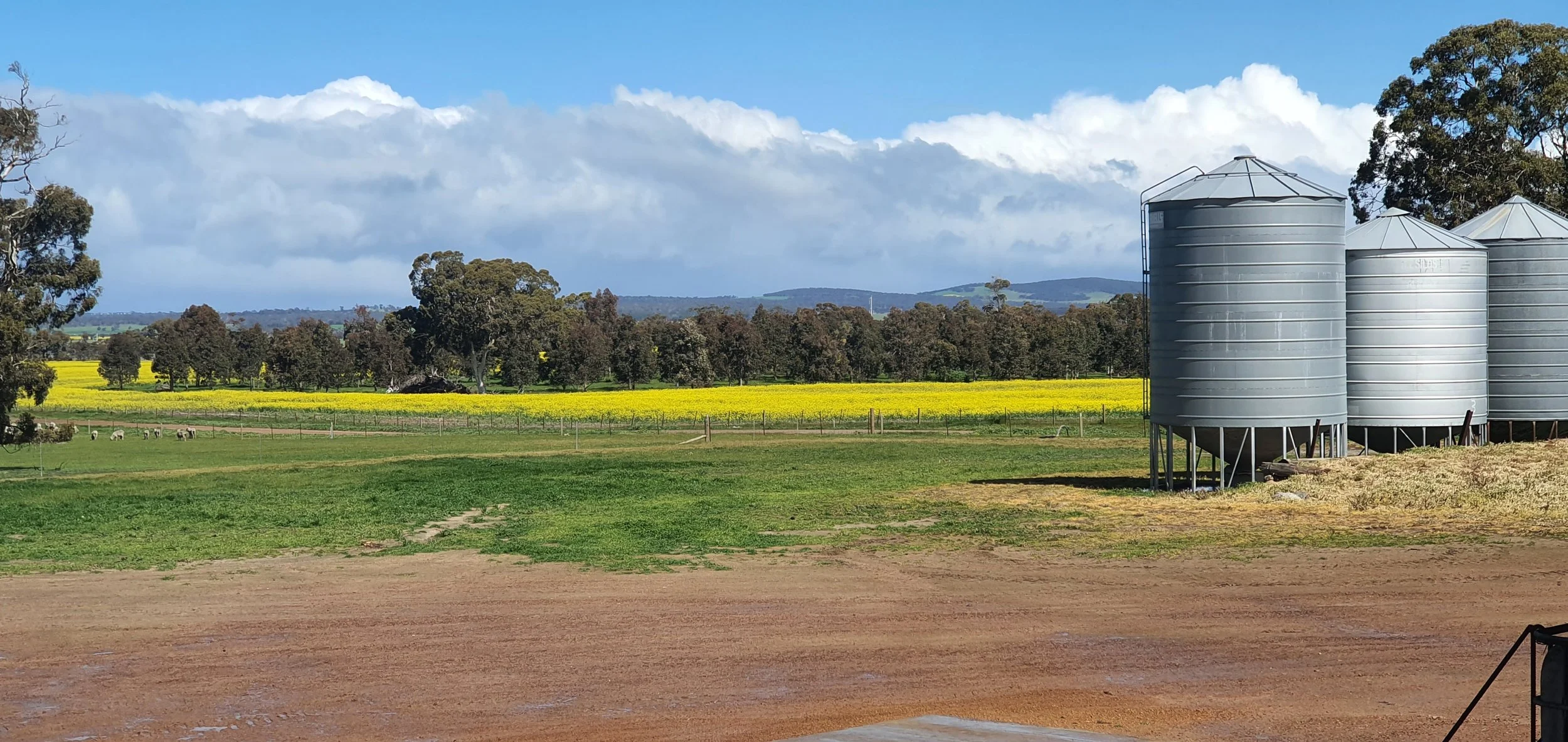
A test paddock in Cranbrook, WA
Modern agriculture runs increasingly on data. As farms grow and conditions get harder to predict, the ability to monitor conditions remotely has become a real operational advantage, replacing manual checks and delayed observations with live information accessible from wherever a grower happens to be. Remote monitoring makes this possible by connecting field sensors to cloud platforms reachable from a phone, tablet or computer, but the concept being simple doesn't mean the system behind it is. Understanding how the pieces fit together helps ensure the whole setup actually delivers long-term value.
Key takeaways
Sensor quality sets the ceiling for the whole system: bad data at the source undermines everything downstream.
Gateways consolidate multiple sensors into a single stream, simplifying communication and reducing failure points.
Cellular connectivity tends to be the most practical choice for remote or distributed properties.
A well-designed system should scale from a handful of sensors to many without needing a rebuild.
The core idea: field to dashboard
At a high level, remote monitoring follows a simple flow: sensors collect data in the field, that data moves through a communication network, and it lands on a platform the user can actually access. Simple as that sounds, each stage carries real weight, and a weakness anywhere in the chain drags down the whole system. It helps to think of a weather station or soil probe not as a standalone device but as one part of a larger ecosystem, where the value comes as much from how the data is delivered and acted on as from the measurement itself.
Sensors: where it all starts
Sensors are the starting point for any monitoring system, responsible for the raw data that everything else depends on. In agriculture, that typically means weather stations measuring rainfall, temperature, humidity, wind and solar radiation, and soil probes measuring moisture and temperature at different depths, alongside other sensors covering water levels, flow rates or specific environmental variables depending on the operation. Accuracy matters more here than almost anywhere else in the chain: inconsistent or incorrect readings undermine everything built on top of them, which is why sensor quality deserves real weight when designing a system.
Data loggers and gateways: pulling it together
Sensors don't usually talk to the cloud directly. Instead, they connect to a central data logger or gateway, which collects readings from multiple sensors, organises them and prepares them for transmission. Gateways often handle communication protocols like RS485 or SDI-12, letting different sensor types operate within the same system, and may also do basic processing like filtering data or managing sampling intervals. By consolidating multiple sensor inputs into one stream, a gateway simplifies the whole system and cuts down the number of communication links that could fail, which makes its reliability genuinely critical to the system as a whole.
Connectivity: getting data off the farm
Once data is collected and organised, it needs to get to a central platform, and there are several ways to do that. WiFi works where coverage is reliable but is limited in range, and radio-based systems like LoRa can span a property but need their own local infrastructure. For most agricultural applications, cellular connectivity tends to be the most practical option, sending data straight from the gateway to the cloud over 4G or LTE without depending on local internet, which suits remote or spread-out farms particularly well. Whatever the method, consistency matters most: data needs to move without interruption for the system to actually be useful.
Cloud platforms: turning readings into insight
Once data reaches the cloud, it gets stored, processed and made available through a dashboard. Cloud platforms turn raw sensor readings into something genuinely useful, with visualisation tools like charts and trend views that show how conditions change over time. Most also support alerts, notifying a user when soil moisture drops below a threshold or temperature approaches frost risk, and more advanced platforms integrate with other systems, letting data export into or combine with broader farm management tools for more complete decision-making.
Checking conditions from anywhere
One of remote monitoring's clearest advantages is being able to check conditions from wherever you are, whether that's in the field, at home or travelling, using a phone or computer. That removes the need for manual inspection and cuts the time it takes to monitor a large or scattered property. It matters most when conditions can shift fast, like during extreme weather, where being able to respond quickly based on accurate data can genuinely change the outcome.
Alerts and automation
Modern systems are built to do more than just log data, they're built to flag when something needs attention. Alerts can trigger on specific thresholds, notifying a grower when rainfall exceeds a set level, soil moisture drops too low, or temperature nears freezing, letting people respond without needing to check dashboards constantly. Some setups go further still, triggering automated actions like controlling irrigation directly from soil moisture data, cutting manual intervention and improving efficiency at the same time.
Designing for growth
A genuinely good monitoring system should scale as a farm's needs grow. Many operations start with a handful of sensors and expand once they see real value in the data, and a well-designed system supports that growth without needing significant changes to the underlying infrastructure. This is where communication protocols and platform choice matter most: systems built around widely supported sensors and standard interfaces are simply easier to expand later.
Built for genuinely harsh conditions
Agricultural monitoring systems live in tough environments, exposed to weather, temperature extremes and physical wear. Power supply needs real consideration in remote areas, and while solar-powered systems are the standard, they need to be designed for reliable operation year-round, including through low-sunlight stretches. Connectivity needs the same level of robustness, since intermittent transmission undercuts both the data itself and the value of any alerts or automation built on top of it.
What this looks like in practice
Consider a straightforward setup: a weather station and soil moisture probe installed in a field, both connected to a gateway collecting data at regular intervals. The gateway transmits over a cellular network to a cloud platform, and the farmer checks current conditions and historical trends through a mobile app, with alerts configured for low soil moisture or developing frost risk. Based on what the system shows, the farmer adjusts irrigation or activates frost protection, and over time the accumulated data helps refine those decisions further. Simple in concept, but a genuine shift from how farm management traditionally worked.
The bottom line
Remote farm monitoring brings sensors, connectivity and cloud platforms together into one comprehensive view of what's happening across a property. By delivering accurate, real-time information, these systems support better decisions and more efficient resource use, letting farmers respond proactively rather than reacting after the fact. As agriculture keeps adopting more technology, the systems that hold up best long-term will be the ones built to be reliable, flexible and genuinely easy to use.