

RS485 vs SDI-12 Sensors: What Should Farmers Use?
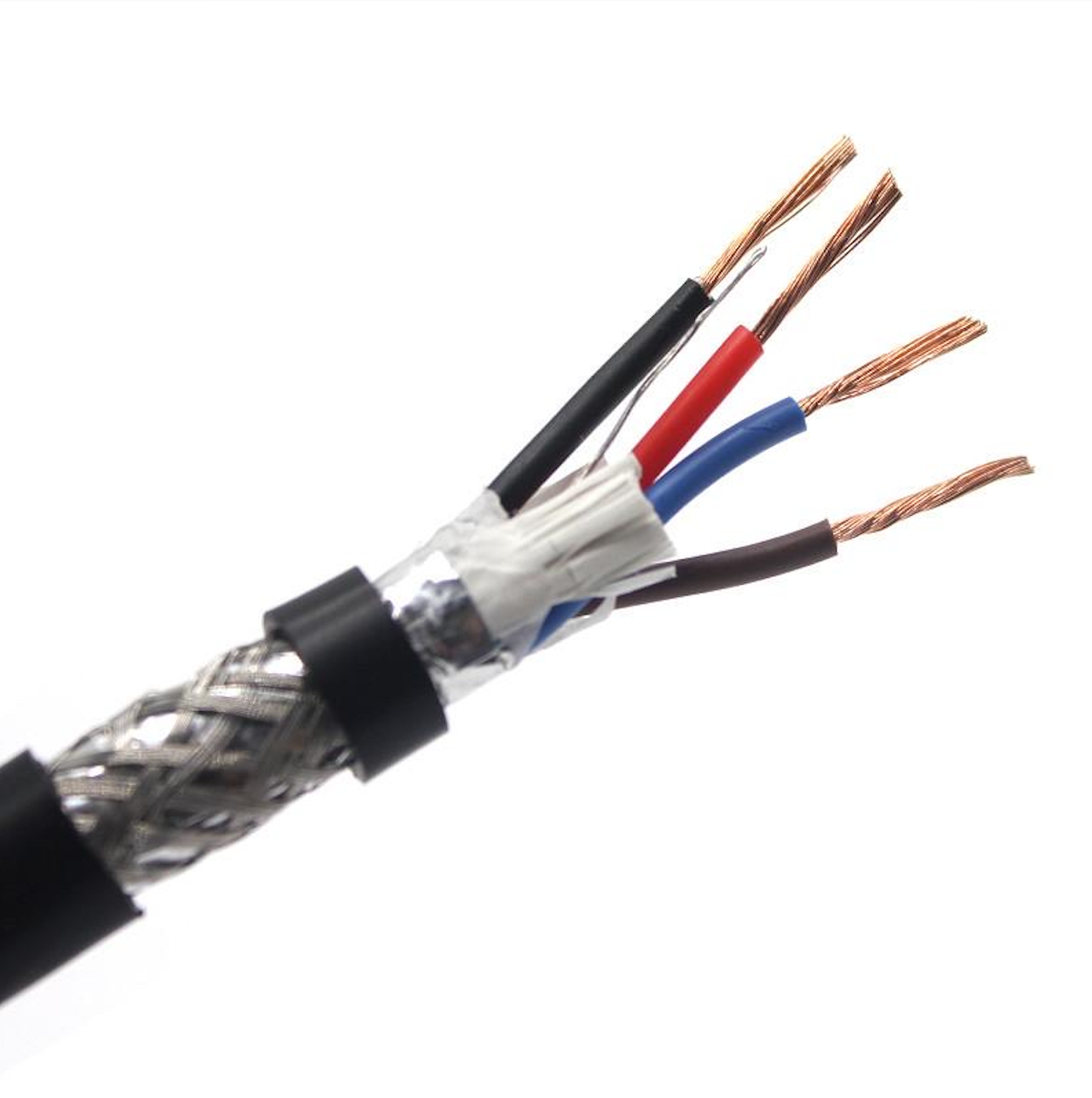
A Stripped RS485 Cable
Most conversations about agricultural monitoring focus on what to measure, rainfall, soil moisture, temperature, but how sensors actually communicate matters just as much. Two standards dominate agricultural monitoring: RS485 and SDI-12. Both are proven technologies, but they're built for slightly different jobs, and the choice between them affects reliability, scalability and how well a system suits real farm conditions. It's a decision that's easy to overlook, since sensors often get bought as part of a package with little thought given to how they connect or how the system might grow later, but it's worth understanding as farms lean further into data-driven practices.
Key takeaways
RS485 handles long cable runs and electrical noise better, thanks to differential signalling.
SDI-12 sensors sit idle and only draw power when queried, making them ideal for solar deployments.
RS485 supports more sensor types and higher data volumes, useful as a system grows.
Many modern platforms run both side by side, using each where it performs best.
What RS485 actually is
RS485 is an industrial communication standard built for reliable data transmission over long distances, used for decades across manufacturing, automation and infrastructure, and now a common choice in agricultural monitoring where durability and stability matter. It lets multiple devices share a single cable using a differential signal that resists electrical noise, which suits outdoor environments with long cable runs particularly well. On a farm, RS485 typically connects weather stations, soil probes, water sensors and other instrumentation back to a central logger, and its robustness makes it a common choice in larger or more complex installations.
What SDI-12 actually is
SDI-12 is a protocol built specifically for environmental monitoring, widely used across agriculture, hydrology and research wherever sensors need to run on very low power. Unlike RS485, it's designed around simple, low-speed communication: sensors sit in a low-power state until a data logger queries them, at which point they wake, take a reading and transmit it. That makes SDI-12 particularly well suited to remote, solar-powered deployments where every bit of energy efficiency counts, which is exactly why soil moisture probes are so commonly available in SDI-12 format.
Which holds up better in the field
RS485 is generally the more robust option in challenging conditions. Its differential signalling maintains data integrity over long cable runs even with electrical noise present, which suits installations spread across large areas or connected via extended cabling. SDI-12 is reliable in most scenarios too, but being lower voltage and slower speed, it's more sensitive to wiring quality and distance, and can run into issues if cables are poorly installed or stretched too far. Both perform well when installed correctly, but RS485 tends to offer a wider margin of reliability under demanding conditions.
Where power consumption tips the balance
Power usage is where SDI-12 has a clear edge. Sensors stay idle most of the time and only draw power while actively taking a measurement, making them a natural fit for solar systems, especially where sunlight or battery capacity is limited. RS485 sensors generally need continuous power or run a higher baseline draw, rarely an issue where solar capacity is generous, but a real constraint on smaller or more remote installations. For applications where energy efficiency is critical, like a remote soil monitoring station, SDI-12 is usually the better fit.
Data speed and where it starts to matter
Speed isn't always a priority in agricultural monitoring, but it becomes relevant as systems grow more complex. RS485 supports faster transmission and handles larger data volumes more efficiently, useful when many sensors share a network or frequent measurements are needed. SDI-12 runs at a much lower data rate, generally fine for periodic environmental readings but less efficient as sensor count or data demands climb. Most farm applications sit comfortably within either standard's limits, but RS485 offers more headroom for larger systems.
What installation actually looks like
RS485 generally needs careful termination and proper wiring practice, which sounds involved but is well understood and widely implemented across many industries. SDI-12 tends to be simpler to wire, typically a three-wire setup that's easier to deploy in smaller systems, though maintaining signal quality over longer distances takes more care. In broad terms, RS485 suits structured, larger-scale installations, while SDI-12 offers genuine simplicity for smaller, low-power deployments.
How each scales as a system grows
RS485 is supported across a huge range of industrial and agricultural sensors, making it flexible and well suited to systems that will grow or diversify over time, particularly when integrating several sensor types into one platform. SDI-12, while common in environmental sensing, is more specialised, dominant for soil probes and certain weather sensors, but with a narrower range of available devices than RS485. For farms building toward a comprehensive system spanning multiple sensor types, RS485 tends to offer the stronger foundation.
So which should you actually choose?
There's no single right answer, it depends on the application. For simple, low-power deployments focused on soil moisture, SDI-12 is usually the most practical choice, its energy efficiency and wide adoption in environmental sensors making it a strong fit for remote installations. For larger systems needing high reliability, long cable runs or a wide range of integrated sensors, RS485 is typically the better solution. In many cases, the best answer isn't choosing one over the other: modern monitoring platforms can run both within the same system, using each where it performs best, SDI-12 soil probes alongside RS485 weather stations, for instance, combining low power consumption with reliability and scalability.
The bottom line
As agriculture leans further into data, the technology behind a monitoring system matters more than it might first appear. Choosing between RS485 and SDI-12 isn't just a technical footnote, it shapes reliability, scalability and how well the system holds up over years of use. In many cases, the most effective setup combines both, using each standard exactly where it delivers the most value.